Two Stadiums, One Corridor, Billions at Stake
Two Stadiums, One Corridor, Billions at Stake
A potential Buccaneers renovation and a brand-new $2.3 billion Rays ballpark are converging along Dale Mabry Highway, forcing Tampa to confront two of its biggest financial decisions simultaneously.
A potential Buccaneers renovation and a brand-new $2.3 billion Rays ballpark are converging along Dale Mabry Highway, forcing Tampa to confront two of its biggest financial decisions simultaneously.
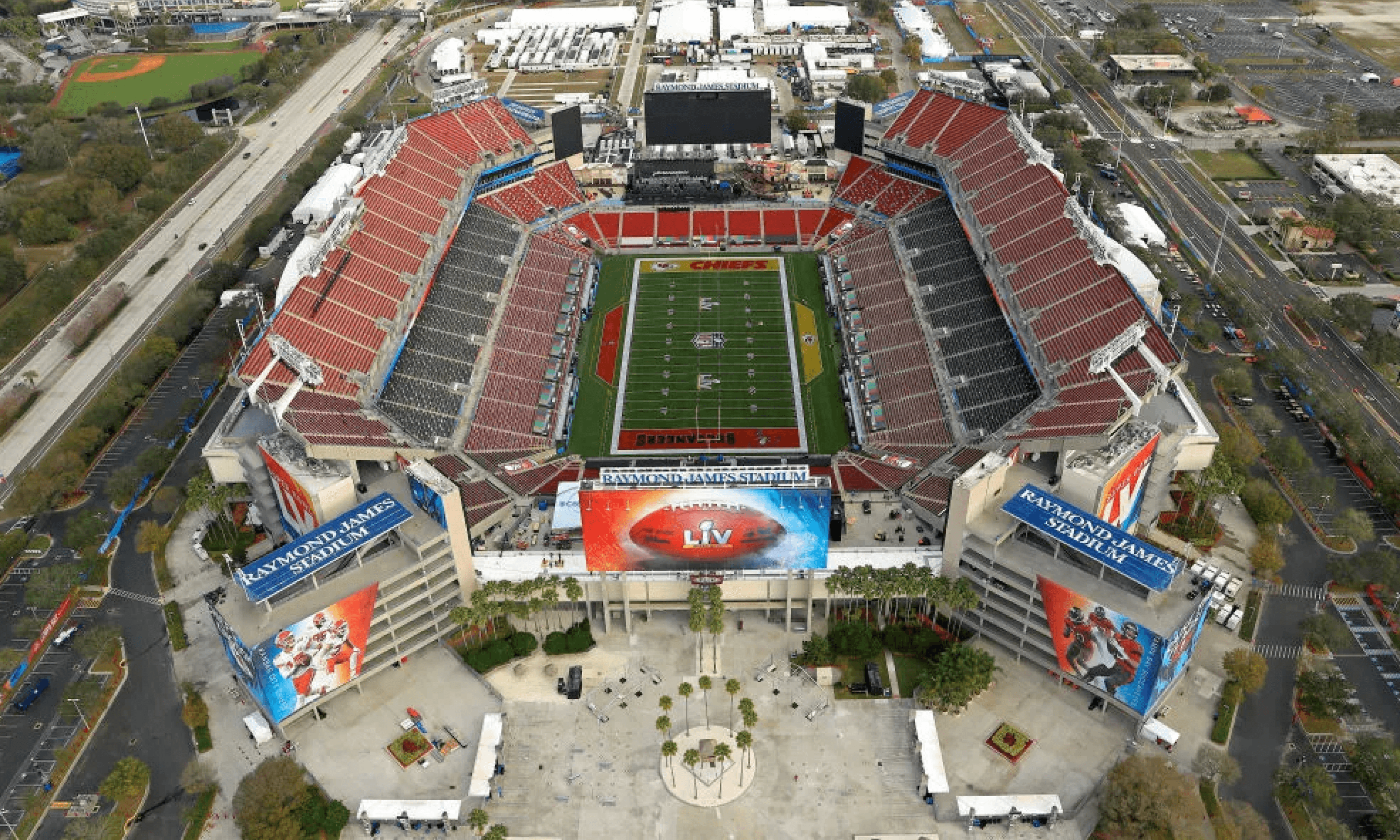
With their lease at Raymond James Stadium set to expire in 2028, the Tampa Bay Buccaneers are in the early stages of what could become one of the most significant infrastructure decisions in the franchise's history. The stadium, which opened in 1998, is now tied with Baltimore's M&T Bank Stadium as the tenth-oldest venue in the NFL, and the clock is ticking on meaningful action.
Publicly, co-owner Joel Glazer has signaled that a major renovation is the preferred path forward. "It's something you're always looking at because the fan experience is so important in the NFL, in all sports," Glazer told reporters at the NFL's annual meeting, adding that the team is evaluating what has been done at other venues and how to incorporate the best elements into Raymond James Stadium.
The team has engaged Populous, a leading sports architecture firm, to assess repairs and improvements needed at the facility, with major events like the Super Bowl and college football championships hanging in the balance.
The communications picture between the team and local government is more complicated. Hillsborough County Commissioner Ken Hagan, a member of the Tampa Sports Authority board, has noted that the Buccaneers had not yet provided renovation plans even after repeated requests. Glazer has pushed back on that characterization, describing the process as both sides independently completing their assessments before coming together to negotiate. "We're going through a phase right now where we're assessing the stadium and what might be needed, and I know they're assessing the stadium and what might be needed, and once both of us are done with our assessments, then we come together and go talk about it," Glazer said.
Neither side has disclosed projected costs, with architects expected to complete their study before real discussions around timing and budget begin. Nationally, comparable NFL renovation projects have routinely exceeded $1 billion, with public funding typically comprising a significant portion of the total. Locally, the framework for that conversation already exists. A 2024 report estimated maintenance costs for Raymond James Stadium at $137 million between 2028 and 2032 alone, underscoring the urgency of a broader reinvestment plan.
The stakes extend beyond the regular season. Tampa and Raymond James Stadium have been selected to host the 2028-29 College Football Playoff National Championship Game, making the condition of the facility a matter of immediate regional pride and revenue. The venue has hosted three Super Bowls, with the most recent coming in 2021 when the Buccaneers won on their home field.
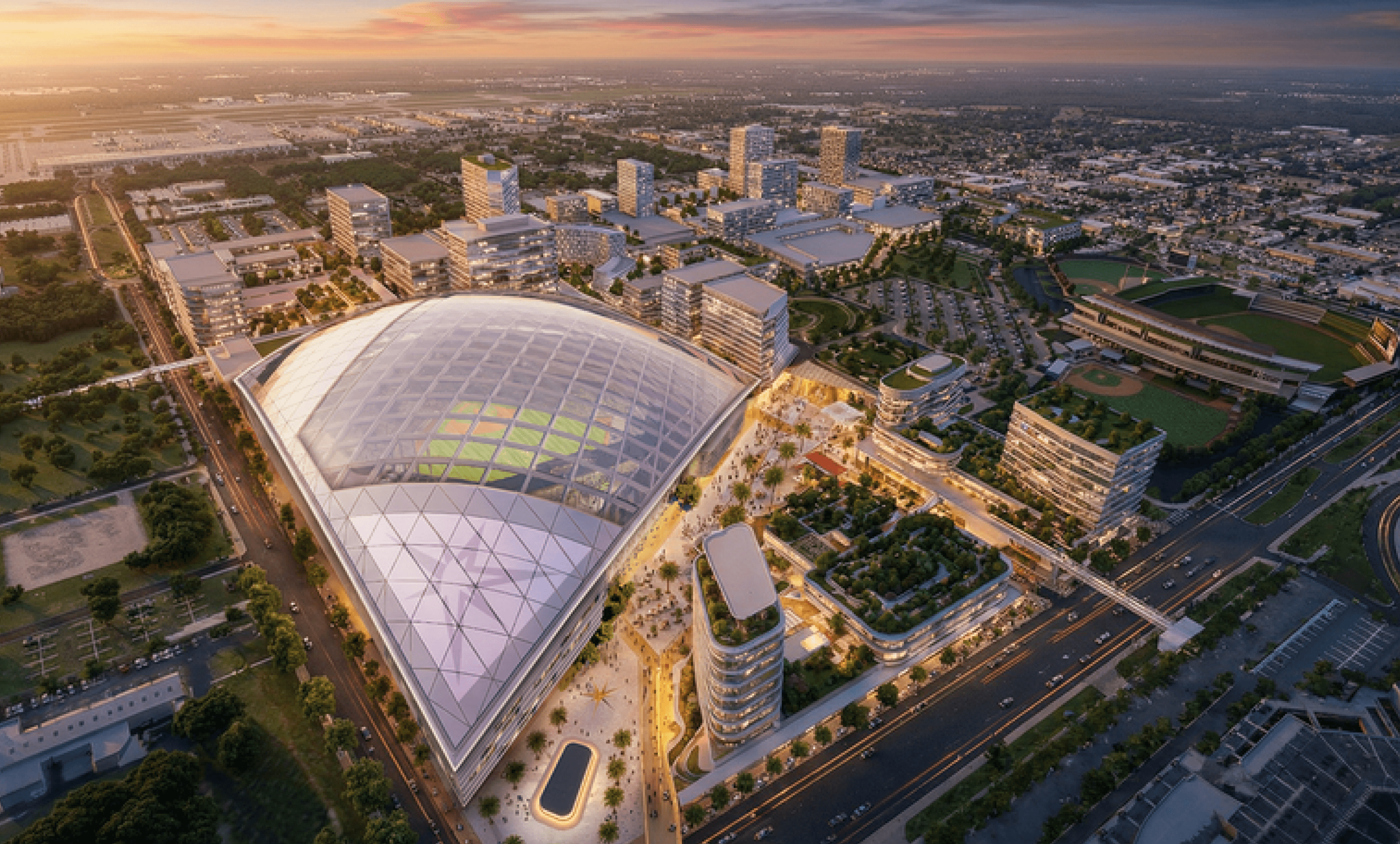
Just across Dale Mabry Highway, an even larger and faster-moving stadium conversation is underway. On February 5, 2026, the Tampa Bay Rays unveiled the first conceptual renderings for a proposed $2.3 billion ballpark and mixed-use development on the Dale Mabry campus of Hillsborough College.
The proposal is the product of a newly energized ownership group. Managing partner Patrick Zalupski closed on the purchase of the team in October 2025, and within 100 days the new ownership secured a memorandum of understanding with Hillsborough College, earned a unanimous vote from the county commission to begin negotiations, obtained state land transfers, and received public endorsements from both the governor and the MLB commissioner.
The ballpark site, spanning roughly 130 acres, sits in Tampa's Westshore District directly across from Raymond James Stadium and adjacent to Steinbrenner Field, where the Rays played during their 2025 season while Tropicana Field was repaired following Hurricane Milton damage.
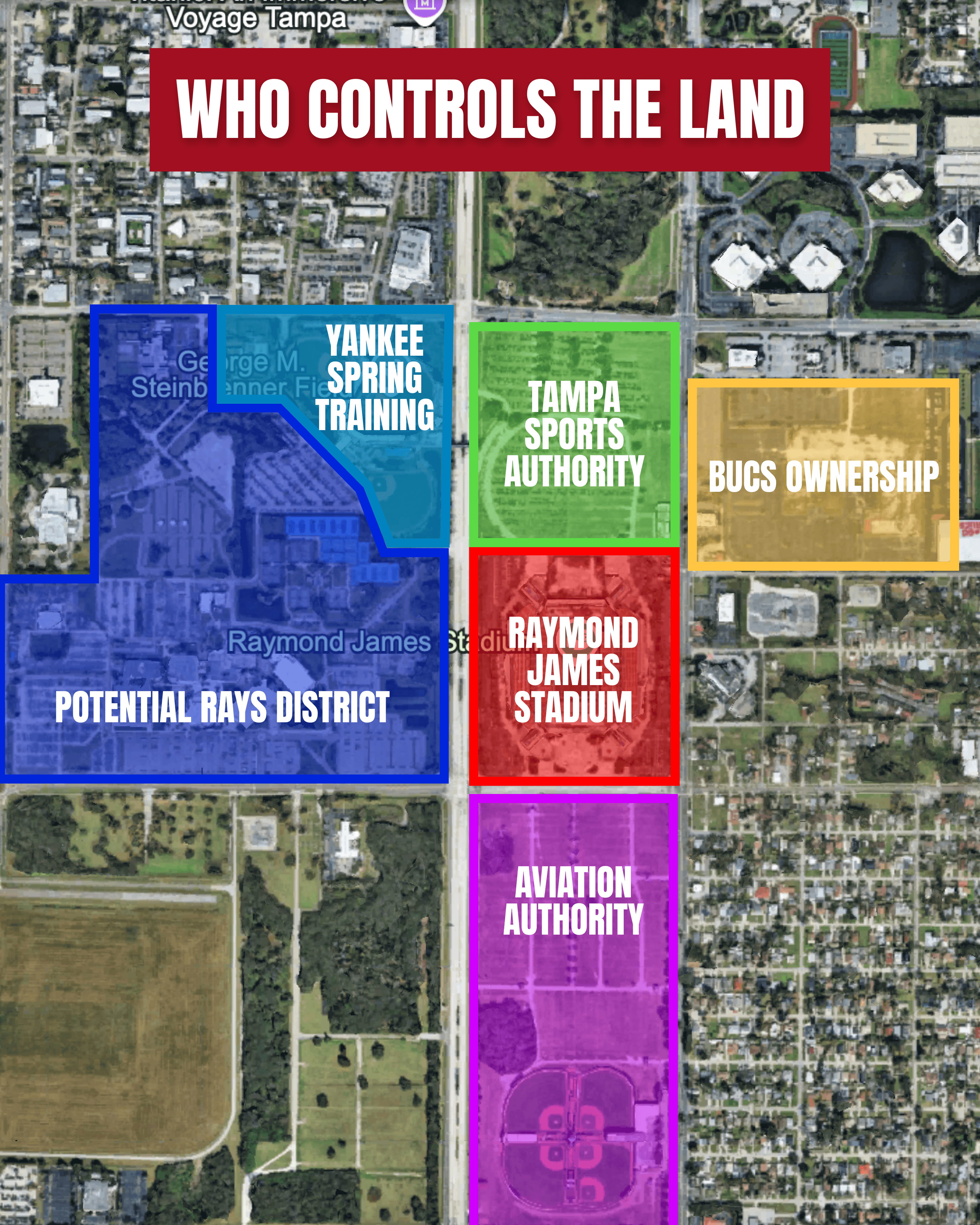
The plan divides the site into four districts: a Champions Quarter housing the ballpark at the corner of Dale Mabry and West Tampa Bay Boulevard; an Invention Edge featuring a rebuilt Hillsborough College campus; The Row, a central street running through the development; and The Canopy, open parkland defined by shade and greenery. The broader mixed-use development surrounding the ballpark, which includes hotels, offices, restaurants, residential units, and recreational space, would be 100 percent privately financed.
The Rays' new ownership group has proposed paying 50 percent of the total stadium cost, leaving approximately $1.15 billion that would require public contributions from Hillsborough County and the City of Tampa. Potential county funding sources under discussion include proceeds from the county's hotel tax and excess funds from the voter-approved Community Investment Tax, though each of those sources carries existing commitments to other institutions and projects.
Hillsborough County commissioners had originally targeted an April 1 meeting to present a financing package, but that timeline has slipped, with a vote on the framework now expected no earlier than April 15. Tampa City Council is expected to take up the matter the following day, April 16.
An independent study is currently underway to verify the team's financial projections and economic impact assumptions. Unresolved issues include parking logistics, traffic management, and a range of construction cost questions, with members of the Tampa Sports Authority already raising pointed questions about the project's financial structure.
The Dale Mabry proposal also marks a sharp departure from where the Rays stood just a year ago. In March 2025, the team formally exited a $1.3 billion stadium deal centered on the redevelopment of the Historic Gas Plant property in St. Petersburg, citing an untenable delay in bond funding tied to post-hurricane economic uncertainties. The Hillsborough College site is the franchise's fresh start.
The convergence of these two projects along Dale Mabry Highway is reshaping how Tampa thinks about the entire Westshore corridor. The area already anchors some of the region's largest sports infrastructure, and the addition of a new baseball district modeled loosely on the Atlanta Braves' Truist Park and The Battery development would make it one of the most concentrated sports and entertainment destinations in the southeastern United States.
For the Buccaneers, the implications are direct. A state-of-the-art ballpark rising steps away from Raymond James Stadium raises the bar for what any renovated NFL facility must deliver to remain competitive. The modern model for major league venues has shifted decisively toward mixed-use environments that draw foot traffic year-round, not just on game days. The Buccaneers own roughly 18 acres near their stadium, land that could figure prominently in any future development vision.
Both projects also place Tampa at the center of a growing national debate over public investment in professional sports facilities. Two simultaneous stadium deals, each requiring hundreds of millions in taxpayer contributions, will demand clear answers on long-term economic returns, community benefit, and the appropriate limits of public financial exposure.
Rays CEO Ken Babby has described the goal as opening a new ballpark and integrated "live, work, play, and learn" district by 2029, a timeline that would require financing to be locked in, regulatory approvals secured, and construction started within months. The Buccaneers' process is operating on a longer runway, with architectural assessments still underway and formal negotiations with the Tampa Sports Authority yet to begin in earnest.
What is clear is that the decisions made on both sides of Dale Mabry Highway over the next 12 to 24 months will define the physical and economic character of West Tampa .
With their lease at Raymond James Stadium set to expire in 2028, the Tampa Bay Buccaneers are in the early stages of what could become one of the most significant infrastructure decisions in the franchise's history. The stadium, which opened in 1998, is now tied with Baltimore's M&T Bank Stadium as the tenth-oldest venue in the NFL, and the clock is ticking on meaningful action.
Publicly, co-owner Joel Glazer has signaled that a major renovation is the preferred path forward. "It's something you're always looking at because the fan experience is so important in the NFL, in all sports," Glazer told reporters at the NFL's annual meeting, adding that the team is evaluating what has been done at other venues and how to incorporate the best elements into Raymond James Stadium.
The team has engaged Populous, a leading sports architecture firm, to assess repairs and improvements needed at the facility, with major events like the Super Bowl and college football championships hanging in the balance.
The communications picture between the team and local government is more complicated. Hillsborough County Commissioner Ken Hagan, a member of the Tampa Sports Authority board, has noted that the Buccaneers had not yet provided renovation plans even after repeated requests. Glazer has pushed back on that characterization, describing the process as both sides independently completing their assessments before coming together to negotiate. "We're going through a phase right now where we're assessing the stadium and what might be needed, and I know they're assessing the stadium and what might be needed, and once both of us are done with our assessments, then we come together and go talk about it," Glazer said.
Neither side has disclosed projected costs, with architects expected to complete their study before real discussions around timing and budget begin. Nationally, comparable NFL renovation projects have routinely exceeded $1 billion, with public funding typically comprising a significant portion of the total. Locally, the framework for that conversation already exists. A 2024 report estimated maintenance costs for Raymond James Stadium at $137 million between 2028 and 2032 alone, underscoring the urgency of a broader reinvestment plan.
The stakes extend beyond the regular season. Tampa and Raymond James Stadium have been selected to host the 2028-29 College Football Playoff National Championship Game, making the condition of the facility a matter of immediate regional pride and revenue. The venue has hosted three Super Bowls, with the most recent coming in 2021 when the Buccaneers won on their home field.
Just across Dale Mabry Highway, an even larger and faster-moving stadium conversation is underway. On February 5, 2026, the Tampa Bay Rays unveiled the first conceptual renderings for a proposed $2.3 billion ballpark and mixed-use development on the Dale Mabry campus of Hillsborough College.
The proposal is the product of a newly energized ownership group. Managing partner Patrick Zalupski closed on the purchase of the team in October 2025, and within 100 days the new ownership secured a memorandum of understanding with Hillsborough College, earned a unanimous vote from the county commission to begin negotiations, obtained state land transfers, and received public endorsements from both the governor and the MLB commissioner.
The ballpark site, spanning roughly 130 acres, sits in Tampa's Westshore District directly across from Raymond James Stadium and adjacent to Steinbrenner Field, where the Rays played during their 2025 season while Tropicana Field was repaired following Hurricane Milton damage.
The plan divides the site into four districts: a Champions Quarter housing the ballpark at the corner of Dale Mabry and West Tampa Bay Boulevard; an Invention Edge featuring a rebuilt Hillsborough College campus; The Row, a central street running through the development; and The Canopy, open parkland defined by shade and greenery. The broader mixed-use development surrounding the ballpark, which includes hotels, offices, restaurants, residential units, and recreational space, would be 100 percent privately financed.
The Rays' new ownership group has proposed paying 50 percent of the total stadium cost, leaving approximately $1.15 billion that would require public contributions from Hillsborough County and the City of Tampa. Potential county funding sources under discussion include proceeds from the county's hotel tax and excess funds from the voter-approved Community Investment Tax, though each of those sources carries existing commitments to other institutions and projects.
Hillsborough County commissioners had originally targeted an April 1 meeting to present a financing package, but that timeline has slipped, with a vote on the framework now expected no earlier than April 15. Tampa City Council is expected to take up the matter the following day, April 16.
An independent study is currently underway to verify the team's financial projections and economic impact assumptions. Unresolved issues include parking logistics, traffic management, and a range of construction cost questions, with members of the Tampa Sports Authority already raising pointed questions about the project's financial structure.
The Dale Mabry proposal also marks a sharp departure from where the Rays stood just a year ago. In March 2025, the team formally exited a $1.3 billion stadium deal centered on the redevelopment of the Historic Gas Plant property in St. Petersburg, citing an untenable delay in bond funding tied to post-hurricane economic uncertainties. The Hillsborough College site is the franchise's fresh start.
The convergence of these two projects along Dale Mabry Highway is reshaping how Tampa thinks about the entire Westshore corridor. The area already anchors some of the region's largest sports infrastructure, and the addition of a new baseball district modeled loosely on the Atlanta Braves' Truist Park and The Battery development would make it one of the most concentrated sports and entertainment destinations in the southeastern United States.
For the Buccaneers, the implications are direct. A state-of-the-art ballpark rising steps away from Raymond James Stadium raises the bar for what any renovated NFL facility must deliver to remain competitive. The modern model for major league venues has shifted decisively toward mixed-use environments that draw foot traffic year-round, not just on game days. The Buccaneers own roughly 18 acres near their stadium, land that could figure prominently in any future development vision.
Both projects also place Tampa at the center of a growing national debate over public investment in professional sports facilities. Two simultaneous stadium deals, each requiring hundreds of millions in taxpayer contributions, will demand clear answers on long-term economic returns, community benefit, and the appropriate limits of public financial exposure.
Rays CEO Ken Babby has described the goal as opening a new ballpark and integrated "live, work, play, and learn" district by 2029, a timeline that would require financing to be locked in, regulatory approvals secured, and construction started within months. The Buccaneers' process is operating on a longer runway, with architectural assessments still underway and formal negotiations with the Tampa Sports Authority yet to begin in earnest.
What is clear is that the decisions made on both sides of Dale Mabry Highway over the next 12 to 24 months will define the physical and economic character of West Tampa .