
Rays Stadium Deal Clears Three Major Hurdles
Rays Stadium Deal Clears Three Major Hurdles
Tampa City Council narrowly approved a non-binding framework for the $2.3 billion Rays stadium project Thursday, following approvals from Hillsborough County and College officials.
Tampa City Council narrowly approved a non-binding framework for the $2.3 billion Rays stadium project Thursday, following approvals from Hillsborough County and College officials.
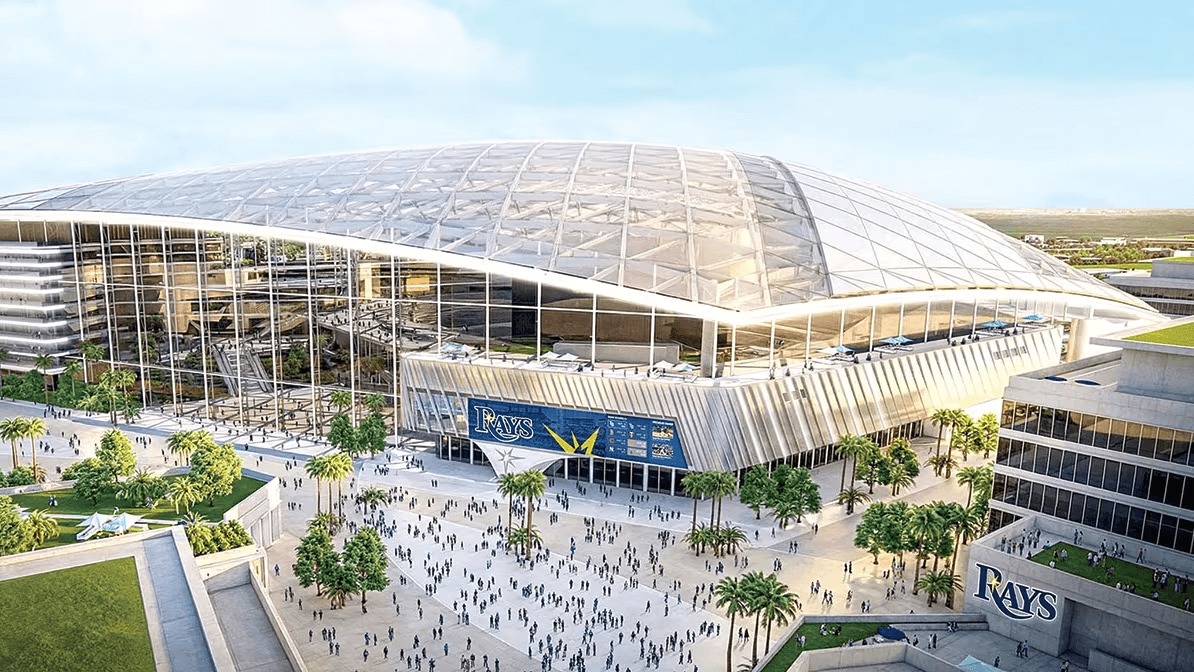
The Tampa City Council narrowly voted 4-3 to move forward a nonbinding memorandum of understanding (MOU) with the Tampa Bay Rays to build a new ballpark and mixed-use district on Hillsborough College's Dale Mabry campus. The vote came one day after the Hillsborough County Commission approved the same MOU in a 5-2 vote, and the Hillsborough College Board of Trustees also approved a ground lease Wednesday for the redevelopment. The back-to-back approvals represent the first time in years that the Rays have secured political support, a clear development framework, and formal control of a proposed stadium site simultaneously.
The project represents a defining moment for the franchise. After decades of uncertainty surrounding the team's long-term future in Tampa Bay, the Rays now have a framework in place to build a ballpark and mixed-use development. Their current lease at St. Petersburg's Tropicana Field expires at the end of 2028, making a March 2029 stadium opening target realistic but ambitious.
The public contribution would be capped at $976 million: approximately $796 million from the county and $180 million from the city. The county's contribution is layered across multiple revenue sources: $360 million from Community Investment Tax revenue, $263 million in tourist development tax bond proceeds, a $40 million sixth-cent tourist tax reserve payment, $30 million in federal disaster recovery dollars for stormwater work, and $103 million from other county sources.
Tampa's $180 million breaks down into two components. $80 million from community investment tax (CIT) funding and up to $100 million from the Drew Park Community Redevelopment Area. Notably, the CIT money would be paid over four years, according to the agreement, with no bonding, which would save on interest and issuance costs.
The Rays would contribute approximately $1.27 billion, plus any construction cost overruns, representing roughly 55% of the total project cost. This commitment gives the private entity financial incentive to control expenses and complete the project efficiently.
The lease is structured to last 99 years, with options for four additional 10-year extensions, potentially extending the agreement to 139 years total. Under the memorandum, Hillsborough College would retain a portion of the property, referred to as the "College District," for newly built academic facilities, while the remaining land would be leased to the Rays for at least 99 years.
The college would lease the entire 113-acre property, save for a "College District" in the southwestern corner, to the Rays. The annual base rent is $10, though the tenant would be responsible for nearly all property-related expenses, including taxes, insurance, utilities and maintenance. This structure allows Hillsborough College to retain ownership and long-term upside while transferring operational and financial responsibility to the Rays.
The college benefits strategically as well. The site, located immediately south of George M. Steinbrenner Field (the Yankees spring training facility) and across Dale Mabry Highway from Raymond James Stadium, sits in an emerging sports and entertainment corridor. For the institution, the redevelopment promises modern facilities and a new campus alongside the professional development surrounding it.
Council members Bill Carlson, Luis Viera, Naya Young, and Alan Clendenin voted yes, while the three opposing votes reflected broader concerns about public funding mechanisms and council transparency. Councilwoman Lyn Hurtak voted no, citing the city's obligation to voters who approved the community investment tax under specific conditions and raising concerns about the council being excluded from negotiations. Her concerns centered on prior legal opinions restricting CIT use at Raymond James and Amalie Arena to maintenance and repair only, not new facilities.
At the county level, commissioners Donna Cameron Cepeda and Joshua Wostal, an outspoken critic of the agreement, voted no, with Wostal calling the decision "a monumental betrayal to the taxpayers of Hillsborough County".
Notably, councilman Bill Carlson, considered the swing vote, said he supported the MOU only because state funding for the project depends on the agreement moving forward. However, he indicated he does not currently support a final deal. This suggests additional negotiations and political navigation lie ahead.
The MOU is explicitly non-binding. Local officials repeatedly characterized it as a framework for negotiations rather than final approval. The three parties now have authorization to finalize definitive agreements that address specifics the MOU leaves open, including maintenance cost responsibility, non-ballpark land ownership structures, and mechanisms for recourse if surrounding private development does not materialize.
The CIT is a half-penny sales tax levied for capital improvement projects. It was first approved in 1996 for a period of 30 years and was set to expire this November. Voters in 2024 reauthorized the tax until 2041, but the vote was narrow, with less than 52% of voters favoring it. This narrow reauthorization adds political complexity to plans that rely on CIT revenue.
The Rays have committed to opening the ballpark by March 2029, a timeline that aligns with the expiration of their Tropicana Field lease. Before that date, the team must still secure zoning and land-use approvals, finalize comprehensive financing, obtain Major League Baseball approval, and navigate state deed restrictions affecting portions of the property.
The three approvals this week position the Rays stadium project further along than any previous stadium proposal in decades. Unlike prior attempts that stalled due to lack of political will or unresolved land control, this framework has political backing from two elected bodies, a cooperative college partner with formal authority over the land, and explicit Rays investment covering cost overruns. However, the narrow votes and outstanding issues signal that final approval will require sustained political coordination and public persuasion before binding agreements return for formal council votes later in the year.
The Tampa City Council narrowly voted 4-3 to move forward a nonbinding memorandum of understanding (MOU) with the Tampa Bay Rays to build a new ballpark and mixed-use district on Hillsborough College's Dale Mabry campus. The vote came one day after the Hillsborough County Commission approved the same MOU in a 5-2 vote, and the Hillsborough College Board of Trustees also approved a ground lease Wednesday for the redevelopment. The back-to-back approvals represent the first time in years that the Rays have secured political support, a clear development framework, and formal control of a proposed stadium site simultaneously.
The project represents a defining moment for the franchise. After decades of uncertainty surrounding the team's long-term future in Tampa Bay, the Rays now have a framework in place to build a ballpark and mixed-use development. Their current lease at St. Petersburg's Tropicana Field expires at the end of 2028, making a March 2029 stadium opening target realistic but ambitious.
The public contribution would be capped at $976 million: approximately $796 million from the county and $180 million from the city. The county's contribution is layered across multiple revenue sources: $360 million from Community Investment Tax revenue, $263 million in tourist development tax bond proceeds, a $40 million sixth-cent tourist tax reserve payment, $30 million in federal disaster recovery dollars for stormwater work, and $103 million from other county sources.
Tampa's $180 million breaks down into two components. $80 million from community investment tax (CIT) funding and up to $100 million from the Drew Park Community Redevelopment Area. Notably, the CIT money would be paid over four years, according to the agreement, with no bonding, which would save on interest and issuance costs.
The Rays would contribute approximately $1.27 billion, plus any construction cost overruns, representing roughly 55% of the total project cost. This commitment gives the private entity financial incentive to control expenses and complete the project efficiently.
The lease is structured to last 99 years, with options for four additional 10-year extensions, potentially extending the agreement to 139 years total. Under the memorandum, Hillsborough College would retain a portion of the property, referred to as the "College District," for newly built academic facilities, while the remaining land would be leased to the Rays for at least 99 years.
The college would lease the entire 113-acre property, save for a "College District" in the southwestern corner, to the Rays. The annual base rent is $10, though the tenant would be responsible for nearly all property-related expenses, including taxes, insurance, utilities and maintenance. This structure allows Hillsborough College to retain ownership and long-term upside while transferring operational and financial responsibility to the Rays.
The college benefits strategically as well. The site, located immediately south of George M. Steinbrenner Field (the Yankees spring training facility) and across Dale Mabry Highway from Raymond James Stadium, sits in an emerging sports and entertainment corridor. For the institution, the redevelopment promises modern facilities and a new campus alongside the professional development surrounding it.
Council members Bill Carlson, Luis Viera, Naya Young, and Alan Clendenin voted yes, while the three opposing votes reflected broader concerns about public funding mechanisms and council transparency. Councilwoman Lyn Hurtak voted no, citing the city's obligation to voters who approved the community investment tax under specific conditions and raising concerns about the council being excluded from negotiations. Her concerns centered on prior legal opinions restricting CIT use at Raymond James and Amalie Arena to maintenance and repair only, not new facilities.
At the county level, commissioners Donna Cameron Cepeda and Joshua Wostal, an outspoken critic of the agreement, voted no, with Wostal calling the decision "a monumental betrayal to the taxpayers of Hillsborough County".
Notably, councilman Bill Carlson, considered the swing vote, said he supported the MOU only because state funding for the project depends on the agreement moving forward. However, he indicated he does not currently support a final deal. This suggests additional negotiations and political navigation lie ahead.
The MOU is explicitly non-binding. Local officials repeatedly characterized it as a framework for negotiations rather than final approval. The three parties now have authorization to finalize definitive agreements that address specifics the MOU leaves open, including maintenance cost responsibility, non-ballpark land ownership structures, and mechanisms for recourse if surrounding private development does not materialize.
The CIT is a half-penny sales tax levied for capital improvement projects. It was first approved in 1996 for a period of 30 years and was set to expire this November. Voters in 2024 reauthorized the tax until 2041, but the vote was narrow, with less than 52% of voters favoring it. This narrow reauthorization adds political complexity to plans that rely on CIT revenue.
The Rays have committed to opening the ballpark by March 2029, a timeline that aligns with the expiration of their Tropicana Field lease. Before that date, the team must still secure zoning and land-use approvals, finalize comprehensive financing, obtain Major League Baseball approval, and navigate state deed restrictions affecting portions of the property.
The three approvals this week position the Rays stadium project further along than any previous stadium proposal in decades. Unlike prior attempts that stalled due to lack of political will or unresolved land control, this framework has political backing from two elected bodies, a cooperative college partner with formal authority over the land, and explicit Rays investment covering cost overruns. However, the narrow votes and outstanding issues signal that final approval will require sustained political coordination and public persuasion before binding agreements return for formal council votes later in the year.