
Tampa Museum of Art Kicks of Expansion Project
Tampa Museum of Art Kicks of Expansion Project
This August, the Tampa Museum of art begn its centennial expansion with the first visible step.
This August, the Tampa Museum of art begn its centennial expansion with the first visible step.
For nearly a century, the Tampa Museum of Art has been a reflection of the city itself by evolving, expanding, and adapting as Tampa grows. Now, as it enters its 100th year, the Museum is preparing for one of the most ambitious transformations in its history. This August, the Tampa Museum of art will begin its centennial expansion with the first visible step by relocating the Curtis Hixon Dog Park to make space for its future footprint. Construction on the new 77,904-square-foot addition will follow this fall, with a formal groundbreaking ceremony planned for October. The groundbreaking ceremony will bring together city leaders, donors, artists, and community members to celebrate the milestone. Museum officials say the event will mark the symbolic beginning of Tampa’s next century of art and culture.
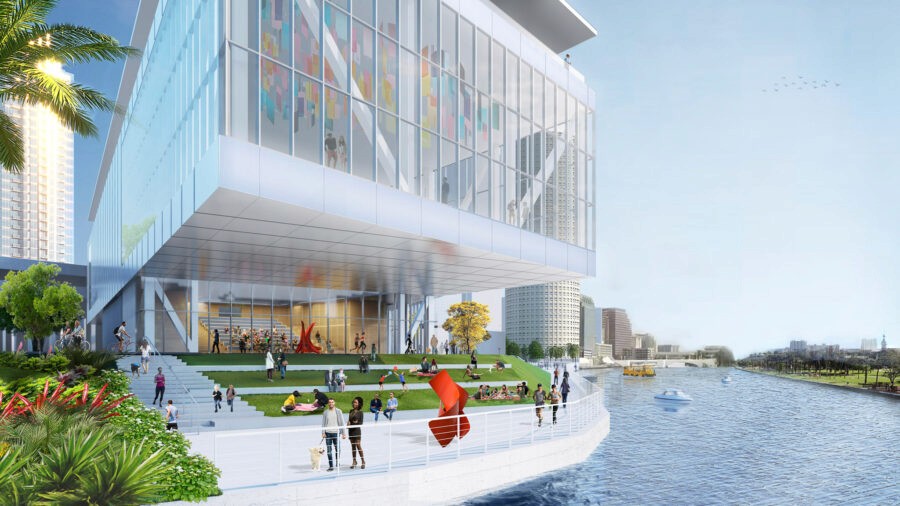
The expanded campus will stretch the Museum toward the river and include a 150-seat auditorium, event and dining spaces, a rooftop venue, and new outdoor sculpture areas along the Riverwalk. The new dog park (expected to open by late 2025) will feature separate areas for large and small dogs, shaded zones, and greater accessibility for downtown’s growing residential population. The design, created by award-winning architecture firm Weiss/Manfredi, will nearly double the Museum’s size and triple its exhibition space. Glass walls, open terraces, and shaded outdoor plazas will invite visitors to experience art both inside and out. With new educational studios and community classrooms, the Museum aims to expand its reach to students across Hillsborough County and beyond.
The project is being funded through the Museum’s ongoing Centennial Campaign, led by a historic $28 million donation from Tampa developer Dick Corbett, the largest private gift ever given to a public art museum in Florida. Having an arts and cultural destination (River Arts District) is essential for a thriving urban core. Projects like this help shape a walkable, vibrant downtown that attracts residents, tourists, and future investment. As campaign chairwoman Cornelia Corbett put it, “This is the first step to bringing the dream of a world-class Museum to Tampa.” To date, the Centennial Campaign has raised over $80 million toward its $100 million goal. In addition to Corbett’s record-setting gift, support has poured in from the Vinik Family Foundation, the Gobioff Foundation, and hundreds of individual donors. Museum Director Michael Tomor said the expansion will “transform the Tampa Museum of Art into a 21st-century cultural anchor—open, inclusive, and designed for everyone in the community.” Beyond the architecture and new spaces, Museum leaders emphasize that this expansion is about accessibility and inclusion. The Tampa Museum of Art currently offers free admission days, student programs, and workshops for seniors and veterans, all of which will expand once construction is complete. Local business owners also expect the project to drive more foot traffic along the Riverwalk, benefiting nearby restaurants, hotels, and event spaces.
“The Museum isn’t just adding square footage—it’s creating opportunity,” said Tampa City Council member Guido Maniscalco. “This expansion will bring art closer to the community and strengthen downtown’s role as the cultural heart of Tampa Bay.”
The expansion’s design blends modern architecture with the natural rhythm of the Riverwalk. Weiss/Manfredi’s plans include open terraces and a glass façade that will reflect the surrounding water and skyline, symbolizing transparency and connection. The rooftop venue will overlook Curtis Hixon Park and the University of Tampa’s iconic minarets, creating one of downtown’s most scenic public spaces. Landscape architects are also working to integrate native plants and shaded seating to make the Riverwalk experience more comfortable year-round.
History
As the Museum prepares to expand its footprint, it’s worth looking back at how far it has come over the past century. The Tampa Museum of Art has a rich history, spanning over 100 years which encompasses the importance of art and culture to the city of Tampa. The first mention of an art center in Tampa was in 1920, when citizens expressed their desire to “help develop prospects for the artistic future of Tampa.” (Tribune). The first showing of art was held in City hall later that year with future exhibits being held in the Tampa’s new Municipal Auditorium, which is now part of the University of Tampa
Fast forward to 1966, the Tampa Art institute becomes part of the University of Tampa and is reorganized into the Tampa Bay Arts Center and in the fall of 1968, TBAC’s first director, Jan Von Adlmann, launched “Museum 70” to position the center as a key hub for 19th and 20th-century art.
In the late 1970’s the Tampa Bay Arts Center cut ties from the university to Tampa and broke ground on the first art museum, which opened downtown at Doyle Carlton Drive. The Museum officially opened its doors in 1979, becoming the first permanent home for art in downtown Tampa. Its early exhibitions featured works from Florida artists alongside traveling collections from across the country, establishing Tampa as a growing hub for modern art in the Southeast. It quickly became a cultural center for downtown Tampa, and a must see attraction for Tampanians and visitors to the city.
In 2000, Mayor Dick Greco announced plans to move Tampa’s art district to its now iconic downtown location, with the Tampa Museum of Art opening its doors on February 5, 2010. Since then, the Museum has hosted major national exhibitions, including shows by Yayoi Kusama, Robert Indiana, and Theo Wujcik. Its youth art programs now serve more than 15,000 students annually, and its community partnerships have made art more accessible to residents across Tampa Bay.
Planned expansion
From long time donor Carol Muroff "I'm happy to see that the museum has something for everyone. I think this expansion will be great to draw more people to the Arts.” City officials see the Museum’s growth as part of a broader effort to strengthen downtown’s cultural core, linking the Riverwalk, Straz Center, and Glazer Children’s Museum into a unified arts corridor. Once completed, the expanded campus will stand as a testament to Tampa’s century-long commitment to art, community, and progress. Construction on the expansion is expected to continue through 2027, with portions of the new campus opening in phases beginning in late 2025. During construction, the Museum will remain open to the public, continuing to host major exhibitions and community events.
Once complete, the expanded Tampa Museum of Art will not only redefine the city’s skyline but also its identity as a regional destination for creativity, culture, and civic pride. What began in 1920 as a simple vision to bring art to Tampa will soon enter its most transformative chapter yet.
For nearly a century, the Tampa Museum of Art has been a reflection of the city itself by evolving, expanding, and adapting as Tampa grows. Now, as it enters its 100th year, the Museum is preparing for one of the most ambitious transformations in its history. This August, the Tampa Museum of art will begin its centennial expansion with the first visible step by relocating the Curtis Hixon Dog Park to make space for its future footprint. Construction on the new 77,904-square-foot addition will follow this fall, with a formal groundbreaking ceremony planned for October. The groundbreaking ceremony will bring together city leaders, donors, artists, and community members to celebrate the milestone. Museum officials say the event will mark the symbolic beginning of Tampa’s next century of art and culture.
The expanded campus will stretch the Museum toward the river and include a 150-seat auditorium, event and dining spaces, a rooftop venue, and new outdoor sculpture areas along the Riverwalk. The new dog park (expected to open by late 2025) will feature separate areas for large and small dogs, shaded zones, and greater accessibility for downtown’s growing residential population. The design, created by award-winning architecture firm Weiss/Manfredi, will nearly double the Museum’s size and triple its exhibition space. Glass walls, open terraces, and shaded outdoor plazas will invite visitors to experience art both inside and out. With new educational studios and community classrooms, the Museum aims to expand its reach to students across Hillsborough County and beyond.
The project is being funded through the Museum’s ongoing Centennial Campaign, led by a historic $28 million donation from Tampa developer Dick Corbett, the largest private gift ever given to a public art museum in Florida. Having an arts and cultural destination (River Arts District) is essential for a thriving urban core. Projects like this help shape a walkable, vibrant downtown that attracts residents, tourists, and future investment. As campaign chairwoman Cornelia Corbett put it, “This is the first step to bringing the dream of a world-class Museum to Tampa.” To date, the Centennial Campaign has raised over $80 million toward its $100 million goal. In addition to Corbett’s record-setting gift, support has poured in from the Vinik Family Foundation, the Gobioff Foundation, and hundreds of individual donors. Museum Director Michael Tomor said the expansion will “transform the Tampa Museum of Art into a 21st-century cultural anchor—open, inclusive, and designed for everyone in the community.” Beyond the architecture and new spaces, Museum leaders emphasize that this expansion is about accessibility and inclusion. The Tampa Museum of Art currently offers free admission days, student programs, and workshops for seniors and veterans, all of which will expand once construction is complete. Local business owners also expect the project to drive more foot traffic along the Riverwalk, benefiting nearby restaurants, hotels, and event spaces.
“The Museum isn’t just adding square footage—it’s creating opportunity,” said Tampa City Council member Guido Maniscalco. “This expansion will bring art closer to the community and strengthen downtown’s role as the cultural heart of Tampa Bay.”
The expansion’s design blends modern architecture with the natural rhythm of the Riverwalk. Weiss/Manfredi’s plans include open terraces and a glass façade that will reflect the surrounding water and skyline, symbolizing transparency and connection. The rooftop venue will overlook Curtis Hixon Park and the University of Tampa’s iconic minarets, creating one of downtown’s most scenic public spaces. Landscape architects are also working to integrate native plants and shaded seating to make the Riverwalk experience more comfortable year-round.
History
As the Museum prepares to expand its footprint, it’s worth looking back at how far it has come over the past century. The Tampa Museum of Art has a rich history, spanning over 100 years which encompasses the importance of art and culture to the city of Tampa. The first mention of an art center in Tampa was in 1920, when citizens expressed their desire to “help develop prospects for the artistic future of Tampa.” (Tribune). The first showing of art was held in City hall later that year with future exhibits being held in the Tampa’s new Municipal Auditorium, which is now part of the University of Tampa
Fast forward to 1966, the Tampa Art institute becomes part of the University of Tampa and is reorganized into the Tampa Bay Arts Center and in the fall of 1968, TBAC’s first director, Jan Von Adlmann, launched “Museum 70” to position the center as a key hub for 19th and 20th-century art.
In the late 1970’s the Tampa Bay Arts Center cut ties from the university to Tampa and broke ground on the first art museum, which opened downtown at Doyle Carlton Drive. The Museum officially opened its doors in 1979, becoming the first permanent home for art in downtown Tampa. Its early exhibitions featured works from Florida artists alongside traveling collections from across the country, establishing Tampa as a growing hub for modern art in the Southeast. It quickly became a cultural center for downtown Tampa, and a must see attraction for Tampanians and visitors to the city.
In 2000, Mayor Dick Greco announced plans to move Tampa’s art district to its now iconic downtown location, with the Tampa Museum of Art opening its doors on February 5, 2010. Since then, the Museum has hosted major national exhibitions, including shows by Yayoi Kusama, Robert Indiana, and Theo Wujcik. Its youth art programs now serve more than 15,000 students annually, and its community partnerships have made art more accessible to residents across Tampa Bay.
Planned expansion
From long time donor Carol Muroff "I'm happy to see that the museum has something for everyone. I think this expansion will be great to draw more people to the Arts.” City officials see the Museum’s growth as part of a broader effort to strengthen downtown’s cultural core, linking the Riverwalk, Straz Center, and Glazer Children’s Museum into a unified arts corridor. Once completed, the expanded campus will stand as a testament to Tampa’s century-long commitment to art, community, and progress. Construction on the expansion is expected to continue through 2027, with portions of the new campus opening in phases beginning in late 2025. During construction, the Museum will remain open to the public, continuing to host major exhibitions and community events.
Once complete, the expanded Tampa Museum of Art will not only redefine the city’s skyline but also its identity as a regional destination for creativity, culture, and civic pride. What began in 1920 as a simple vision to bring art to Tampa will soon enter its most transformative chapter yet.