New Details Emerge in $6.8B Gas Plant Proposal
New Details Emerge in $6.8B Gas Plant Proposal
The $6.8 billion Historic Gas Plant District redevelopment adds major partners and details an 18-year phased plan emphasizing workforce development, cultural anchors, and public space.
The $6.8 billion Historic Gas Plant District redevelopment adds major partners and details an 18-year phased plan emphasizing workforce development, cultural anchors, and public space.
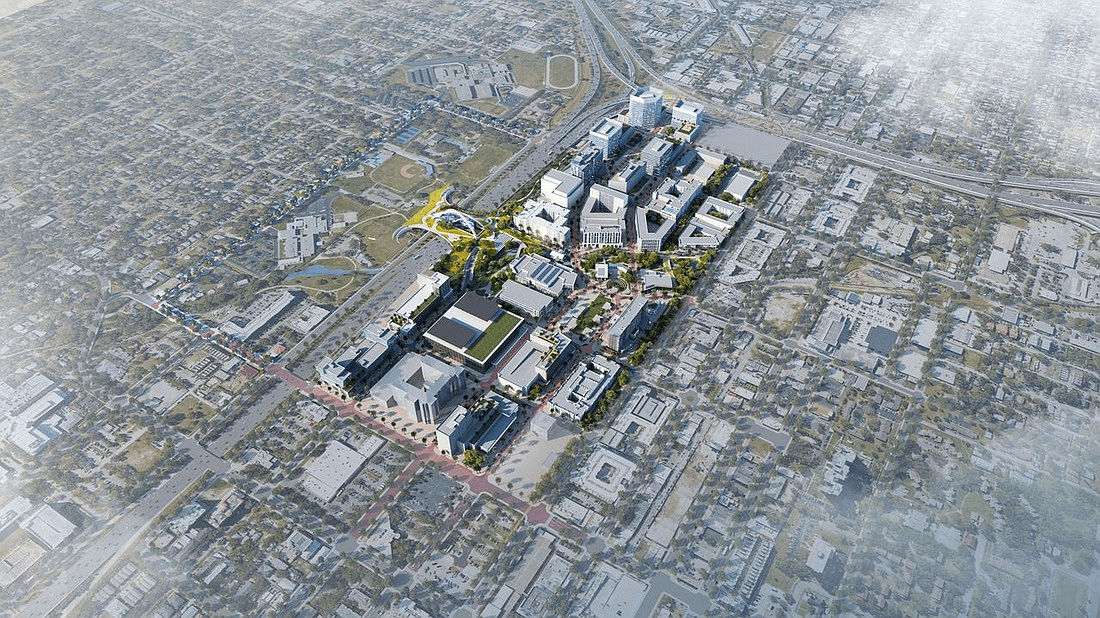
The proposed redevelopment of the Historic Gas Plant District continues to take shape as the development team behind the $6.8 billion plan releases new information about partners, programming, and how the district would be built over time.
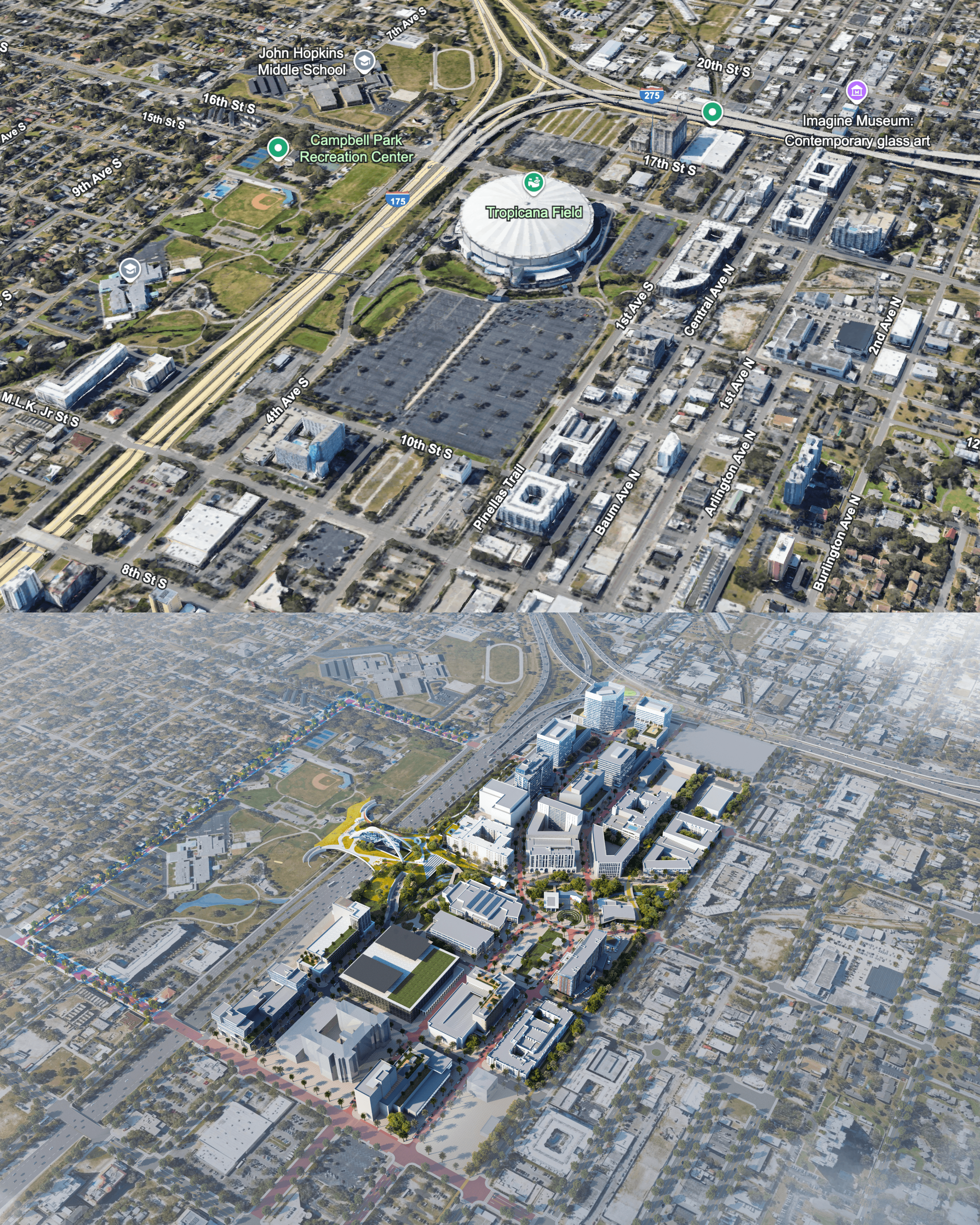
Led by ARK Invest, Ellison Development, and Horus Construction, the proposal covers 95.5 acres surrounding the Tropicana Field site and outlines a long-term redevelopment plan spanning roughly 18 years. While the overall vision remains consistent with earlier announcements, the latest update provides greater clarity on execution, partnerships, and community-focused priorities.
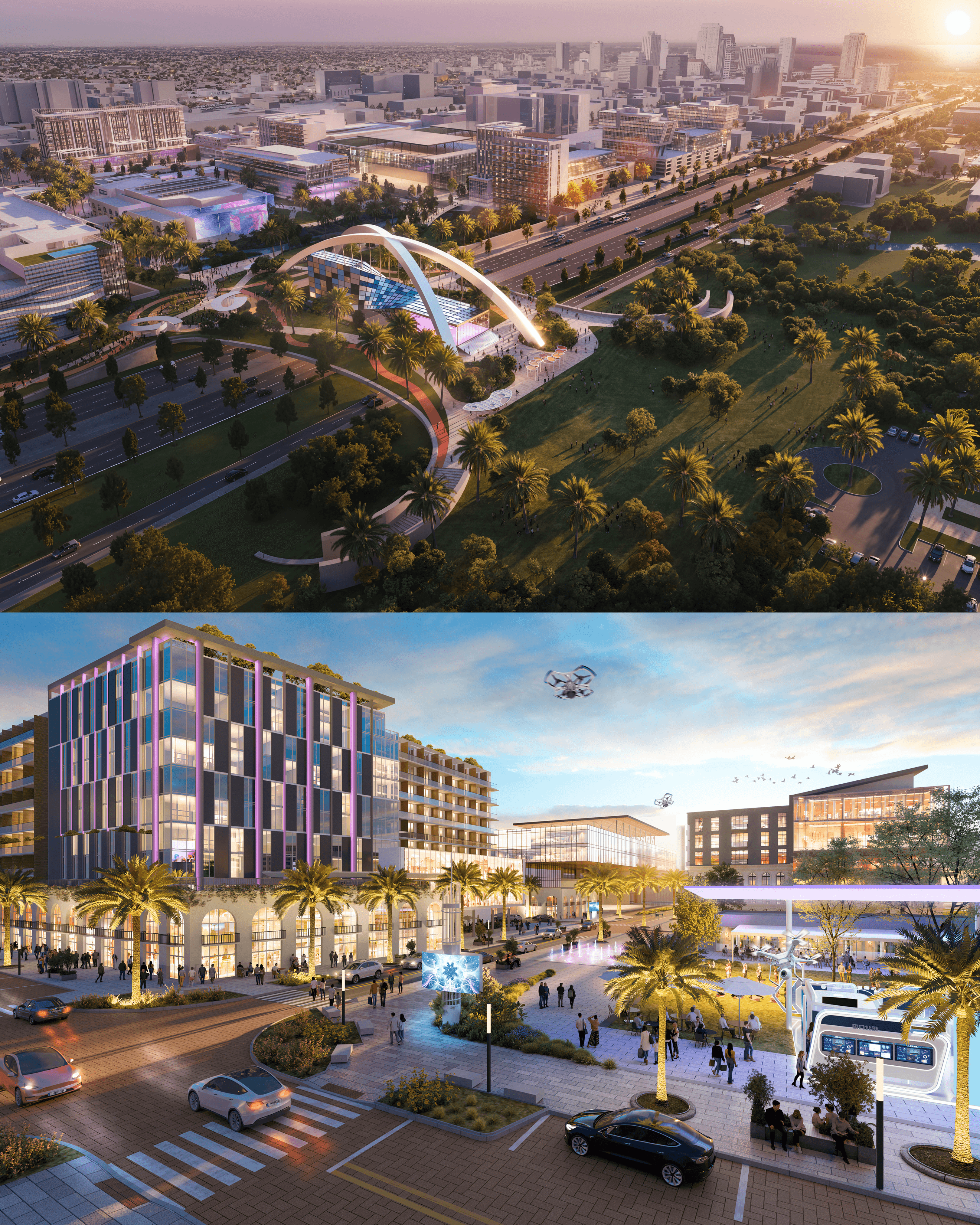
One of the most significant updates is the addition of new strategic collaborators. AECOM Hunt has joined as a construction manager with experience delivering complex civic and event-driven environments. Fengate Asset Management brings a background in large-scale public-private partnerships and long-term infrastructure investment. TVS will serve as the design partner for Innovation Hall, a new flexible venue intended to host conferences, exhibitions, and major events while supporting daily community use.
Innovation Hall is positioned as a central anchor within the district, surrounded by public space and amenities designed to keep the area active year-round. The venue is intended to complement the district’s broader mix of housing, employment, education, and cultural uses rather than function as a standalone attraction.
Workforce development and education have also been expanded in this update. The development team highlighted programs such as Horus Academy, Future Forward, and spARK Labs, which are designed to connect local residents with job training, skill-building, and long-term career pathways tied directly to opportunities created within the district.
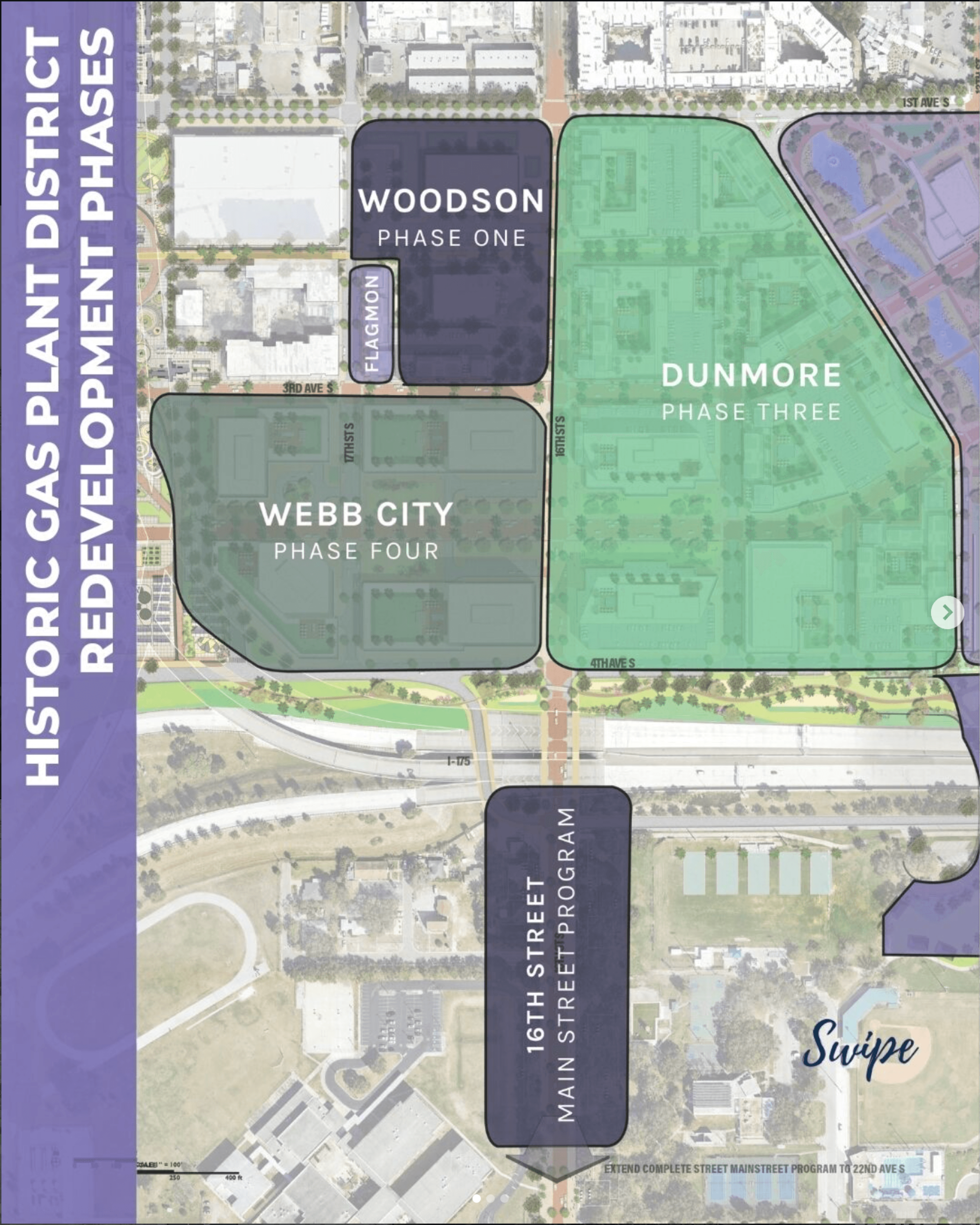
Phasing remains a key part of the proposal. The plan is organized into four phases over approximately 18 years, beginning with the Woodson Phase. This initial phase prioritizes cultural investment, affordable housing, and early infrastructure, including the propos
ed Woodson African American Museum of Florida, which is intended to serve as both a cultural anchor and a recognition of the site’s historic significance.
Public space now plays an even larger role than previously outlined. Approximately 66 percent of the site is proposed for parks, cultural assets, and civic spaces, including Gas Plant Park and the Booker Creek Promenade. These areas are designed to be integrated throughout the district and treated as essential infrastructure rather than leftover space.
As St. Petersburg leaders continue evaluating proposals for the Historic Gas Plant District, the latest update positions this plan as a long-term, phased approach focused on accountability, community access, and economic opportunity. The coming months will determine how this vision fits into the city’s broader goals for redevelopment, equity, and public benefit.
The proposed redevelopment of the Historic Gas Plant District continues to take shape as the development team behind the $6.8 billion plan releases new information about partners, programming, and how the district would be built over time.
Led by ARK Invest, Ellison Development, and Horus Construction, the proposal covers 95.5 acres surrounding the Tropicana Field site and outlines a long-term redevelopment plan spanning roughly 18 years. While the overall vision remains consistent with earlier announcements, the latest update provides greater clarity on execution, partnerships, and community-focused priorities.
One of the most significant updates is the addition of new strategic collaborators. AECOM Hunt has joined as a construction manager with experience delivering complex civic and event-driven environments. Fengate Asset Management brings a background in large-scale public-private partnerships and long-term infrastructure investment. TVS will serve as the design partner for Innovation Hall, a new flexible venue intended to host conferences, exhibitions, and major events while supporting daily community use.
Innovation Hall is positioned as a central anchor within the district, surrounded by public space and amenities designed to keep the area active year-round. The venue is intended to complement the district’s broader mix of housing, employment, education, and cultural uses rather than function as a standalone attraction.
Workforce development and education have also been expanded in this update. The development team highlighted programs such as Horus Academy, Future Forward, and spARK Labs, which are designed to connect local residents with job training, skill-building, and long-term career pathways tied directly to opportunities created within the district.
Phasing remains a key part of the proposal. The plan is organized into four phases over approximately 18 years, beginning with the Woodson Phase. This initial phase prioritizes cultural investment, affordable housing, and early infrastructure, including the propos
ed Woodson African American Museum of Florida, which is intended to serve as both a cultural anchor and a recognition of the site’s historic significance.
Public space now plays an even larger role than previously outlined. Approximately 66 percent of the site is proposed for parks, cultural assets, and civic spaces, including Gas Plant Park and the Booker Creek Promenade. These areas are designed to be integrated throughout the district and treated as essential infrastructure rather than leftover space.
As St. Petersburg leaders continue evaluating proposals for the Historic Gas Plant District, the latest update positions this plan as a long-term, phased approach focused on accountability, community access, and economic opportunity. The coming months will determine how this vision fits into the city’s broader goals for redevelopment, equity, and public benefit.