
Mirasol Owners Seek Demolition After Council Rejects Hotel Plan
Mirasol Owners Seek Demolition After Council Rejects Hotel Plan
Months after Tampa City Council voted 5-2 against a boutique hotel conversion, the owners of Davis Islands' 1926 Mirasol have filed to demolish the locally unprotected building.
Months after Tampa City Council voted 5-2 against a boutique hotel conversion, the owners of Davis Islands' 1926 Mirasol have filed to demolish the locally unprotected building.
A century of Tampa history could be approaching a turning point.
The Mirasol was built to welcome guests a century ago, but a plan to bring that purpose back ran into strong neighborhood opposition. Now its owners want to tear it down.
The demolition filing
Frank and Lindsey Carriera, who bought the Mirasol at 84 Davis Blvd. in 2021 with a small investor group, have filed a demolition application for the 1926 Mediterranean Revival building, Tampa Bay Business & Wealth first reported on Sept. 29. The filing comes months after Tampa City Council rejected their proposal to restore the building and return it to its original use as a boutique hotel.
The application does not say what the owners plan to build on the site or when demolition would begin, according to TBBW. The waterfront property covers about 1.6 acres near the entrance to Davis Islands and holds a 56,507-square-foot building with 58 apartments under a Residential-50 future land use designation.
The owners have not publicly described a replacement project. During the January hearing, however, Frank Carriera told council the land was worth "two to three times more without the existing building than with it," TBBW reported.

Why the hotel plan failed
The Carrieras' proposal would have converted the building's 58 apartments into roughly 116 to 118 hotel rooms and added up to 12 condominiums in two new wings built over the existing surface parking. Plans called for a restaurant, coffee bar, a restored rooftop sky garden, flood-elevated parking and relocation of the basement mechanical systems to higher floors. The owners said they cut the project's size by 37% after neighborhood feedback.
The plan required a comprehensive plan amendment from Residential-50 to Community Mixed Use-35, along with a rezoning. The Planning Commission recommended denial. At a Jan. 15 hearing that ran about five and a half hours and drew more than 100 speakers, council voted 5-2 against the change. Council Chair Alan Clendenin and council member Luis Viera cast the dissenting votes, according to The Tampa Monitor.
Opponents argued that a hotel would bring traffic, noise and a steady flow of transient guests into a quiet residential neighborhood, and that commercial land use would open the door to more intensity on the island. Yard signs reading "Keep the Mirasol residential" appeared around Davis Islands ahead of the vote, Fox 13 reported.
"People act a little bit differently when they're on vacation," Davis Islands resident John Murray told Fox 13. "They're a little more boisterous, with worse behavior at times."
Clendenin saw it the other way. "The hotel application, the hotel use. That gives them the economic viability to save this property," he told the station.
Frank Carriera put it plainly to council: "There's no viable solution and financeable solution unless we have the additional entitlements," according to TBBW. The owners' team said approval would allow them to pursue historic designation but offered no binding guarantee, a gap that fed neighbors' skepticism, The Tampa Monitor reported.
Storm damage and the economics
The owners say Hurricanes Helene and Milton pushed the building past the point where apartment rents could carry it. The 2024 storms flooded the basement, where the building's mechanical systems sit, damaging electrical systems and elevators and flooding the lobby, common areas and parking, Fox 13 and ABC Action News reported. Wind damaged the roof and broke windows. TBBW reported the damage left the building needing structural, electrical, plumbing, facade and roof work.
"The building was wet from top to bottom," Frank Carriera told TBBW in December 2025. ABC Action News reported the building lost about 60% of its residents after the storms, and Carriera told the station the property "will not be sustainable if we have another hurricane season like that."
A century on the water
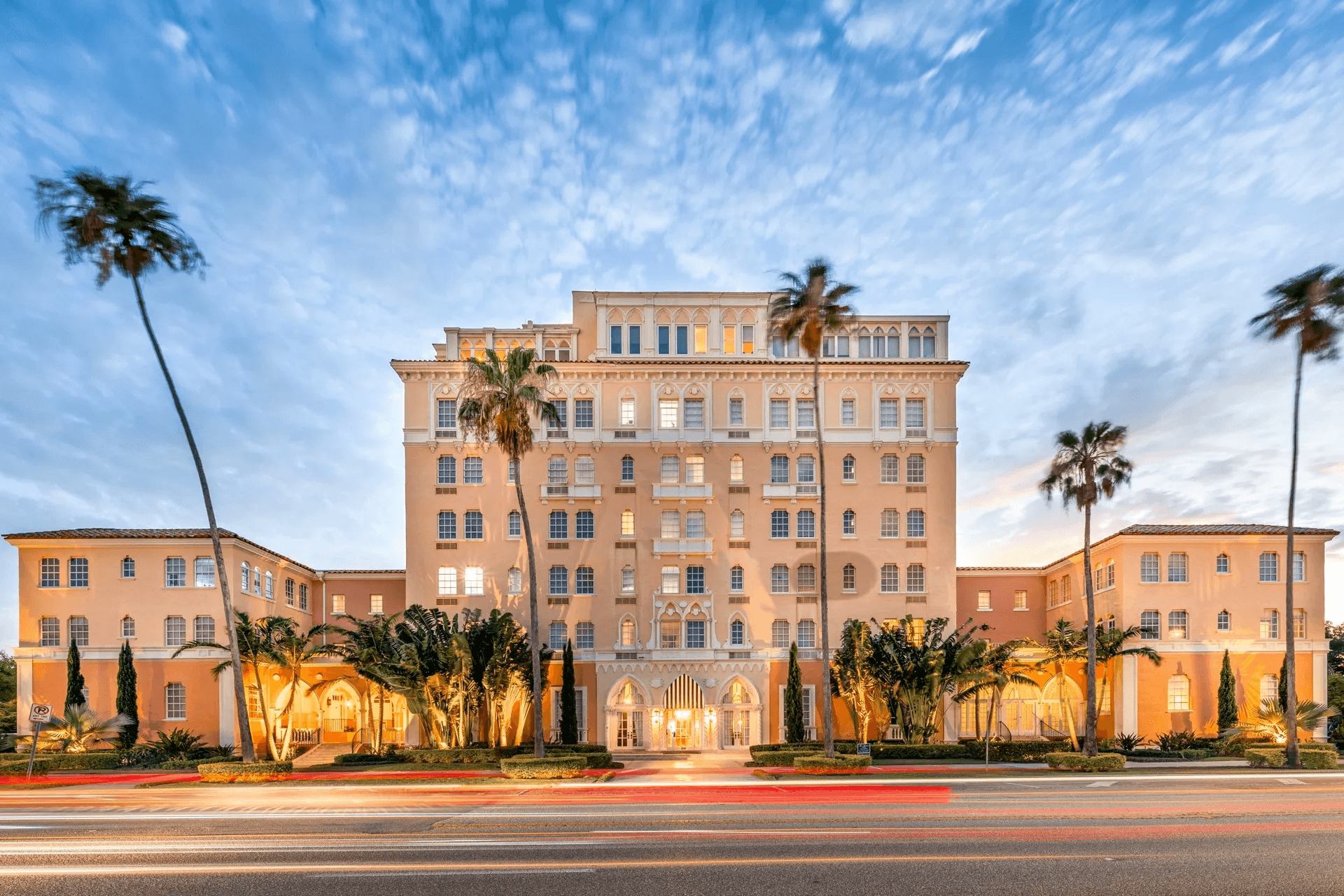
The Mirasol opened in late April 1926 as an apartment-hotel, built during D.P. Davis's development of Davis Islands at the height of the Florida land boom. It cost $750,000, roughly $14 million in today's dollars, and was designed by Miami architect Martin L. Hampton with Tampa architect Franklin O. Adams, according to Tampa Magazine. The seven-story tower and its three-story wings featured a rooftop sky garden, a waterfront restaurant and a private yacht basin.
Davis was lost at sea in October 1926, and the land boom collapsed soon after. The Mirasol went into receivership in 1929 and defaulted on its mortgage in 1930 before reopening in 1932. It housed servicemen training at MacDill and Drew fields during World War II and was converted fully to apartments in 1962.
The building sold in 2016 for $10.375 million, or about $180,000 per unit, to a local investor. Frank Carriera, then a broker with Marcus & Millichap, represented both sides of that deal, the Tampa Bay Times reported. The Carrieras and their investors bought the property in 2021 for $20 million, according to TBBW.
Rodney Kite-Powell, historian at the Tampa Bay History Center, told Fox 13 the building exemplifies "the neighborhood's original Mediterranean Revival and Italian Riviera-inspired architecture, with Spanish and Moorish design elements."
No designation, no safety net
The Mirasol does not have a local historic designation. Landmark status would require the city's Historic Preservation Commission to sign off before demolition. Without it, the application moves through the standard permitting process.
The open questions now are whether and when the city issues the permit, what the owners propose for a waterfront site that sits in the Coastal High Hazard Area, whether preservation advocates or city officials attempt a landmark designation before demolition can proceed, and what happens to the building's current residents.
With the demolition filing now submitted, the future of one of Davis Islands' oldest surviving buildings is once again uncertain.
A century of Tampa history could be approaching a turning point.
The Mirasol was built to welcome guests a century ago, but a plan to bring that purpose back ran into strong neighborhood opposition. Now its owners want to tear it down.
The demolition filing
Frank and Lindsey Carriera, who bought the Mirasol at 84 Davis Blvd. in 2021 with a small investor group, have filed a demolition application for the 1926 Mediterranean Revival building, Tampa Bay Business & Wealth first reported on Sept. 29. The filing comes months after Tampa City Council rejected their proposal to restore the building and return it to its original use as a boutique hotel.
The application does not say what the owners plan to build on the site or when demolition would begin, according to TBBW. The waterfront property covers about 1.6 acres near the entrance to Davis Islands and holds a 56,507-square-foot building with 58 apartments under a Residential-50 future land use designation.
The owners have not publicly described a replacement project. During the January hearing, however, Frank Carriera told council the land was worth "two to three times more without the existing building than with it," TBBW reported.
Why the hotel plan failed
The Carrieras' proposal would have converted the building's 58 apartments into roughly 116 to 118 hotel rooms and added up to 12 condominiums in two new wings built over the existing surface parking. Plans called for a restaurant, coffee bar, a restored rooftop sky garden, flood-elevated parking and relocation of the basement mechanical systems to higher floors. The owners said they cut the project's size by 37% after neighborhood feedback.
The plan required a comprehensive plan amendment from Residential-50 to Community Mixed Use-35, along with a rezoning. The Planning Commission recommended denial. At a Jan. 15 hearing that ran about five and a half hours and drew more than 100 speakers, council voted 5-2 against the change. Council Chair Alan Clendenin and council member Luis Viera cast the dissenting votes, according to The Tampa Monitor.
Opponents argued that a hotel would bring traffic, noise and a steady flow of transient guests into a quiet residential neighborhood, and that commercial land use would open the door to more intensity on the island. Yard signs reading "Keep the Mirasol residential" appeared around Davis Islands ahead of the vote, Fox 13 reported.
"People act a little bit differently when they're on vacation," Davis Islands resident John Murray told Fox 13. "They're a little more boisterous, with worse behavior at times."
Clendenin saw it the other way. "The hotel application, the hotel use. That gives them the economic viability to save this property," he told the station.
Frank Carriera put it plainly to council: "There's no viable solution and financeable solution unless we have the additional entitlements," according to TBBW. The owners' team said approval would allow them to pursue historic designation but offered no binding guarantee, a gap that fed neighbors' skepticism, The Tampa Monitor reported.
Storm damage and the economics
The owners say Hurricanes Helene and Milton pushed the building past the point where apartment rents could carry it. The 2024 storms flooded the basement, where the building's mechanical systems sit, damaging electrical systems and elevators and flooding the lobby, common areas and parking, Fox 13 and ABC Action News reported. Wind damaged the roof and broke windows. TBBW reported the damage left the building needing structural, electrical, plumbing, facade and roof work.
"The building was wet from top to bottom," Frank Carriera told TBBW in December 2025. ABC Action News reported the building lost about 60% of its residents after the storms, and Carriera told the station the property "will not be sustainable if we have another hurricane season like that."
A century on the water
The Mirasol opened in late April 1926 as an apartment-hotel, built during D.P. Davis's development of Davis Islands at the height of the Florida land boom. It cost $750,000, roughly $14 million in today's dollars, and was designed by Miami architect Martin L. Hampton with Tampa architect Franklin O. Adams, according to Tampa Magazine. The seven-story tower and its three-story wings featured a rooftop sky garden, a waterfront restaurant and a private yacht basin.
Davis was lost at sea in October 1926, and the land boom collapsed soon after. The Mirasol went into receivership in 1929 and defaulted on its mortgage in 1930 before reopening in 1932. It housed servicemen training at MacDill and Drew fields during World War II and was converted fully to apartments in 1962.
The building sold in 2016 for $10.375 million, or about $180,000 per unit, to a local investor. Frank Carriera, then a broker with Marcus & Millichap, represented both sides of that deal, the Tampa Bay Times reported. The Carrieras and their investors bought the property in 2021 for $20 million, according to TBBW.
Rodney Kite-Powell, historian at the Tampa Bay History Center, told Fox 13 the building exemplifies "the neighborhood's original Mediterranean Revival and Italian Riviera-inspired architecture, with Spanish and Moorish design elements."
No designation, no safety net
The Mirasol does not have a local historic designation. Landmark status would require the city's Historic Preservation Commission to sign off before demolition. Without it, the application moves through the standard permitting process.
The open questions now are whether and when the city issues the permit, what the owners propose for a waterfront site that sits in the Coastal High Hazard Area, whether preservation advocates or city officials attempt a landmark designation before demolition can proceed, and what happens to the building's current residents.
With the demolition filing now submitted, the future of one of Davis Islands' oldest surviving buildings is once again uncertain.